AI-powered assistants are transforming the way people work, learn, and create. From answering questions to supporting research and content creation, these tools help users save time and improve productivity.n our fast-paced digital world, the challenge isn’t finding information—it’s synthesizing it cleanly without wasting half your day. Enter ChatGPT, the official mobile powerhouse developed by OpenAI, designed to turn conversational prompts into instant answers, structured essays, and functional code directly from your smartphone.
App Overview & Market Position
ChatGPT is a cross-platform generative AI assistant that acts as a 24/7 brainstorming partner, researcher, and copywriter. On mobile, it untethers users from their desktops, providing a streamlined chat interface where you can speak, type, or upload images to solve problems on the go. Whether you need to transcribe a handwritten recipe from a quick photo or translate a conversation in real time, the mobile application condenses massive cloud-computing power into a lightweight, pocketsize tool.
Developed by OpenAI, the application sits comfortably at the top of the productivity charts, securing its status as the fastest-growing consumer app in history. While competitors like Google Gemini boast native ecosystem integrations and Anthropic’s Claude shines in deeply nuanced long-form editing, ChatGPT maintains its market dominance through its unrivaled versatility. Its unique selling point is its comprehensive ecosystem, featuring a rich library of user-created custom GPTs, a peerless conversational “Advanced Voice Mode,” and persistent personalization features that remember your preferences across multiple sessions.
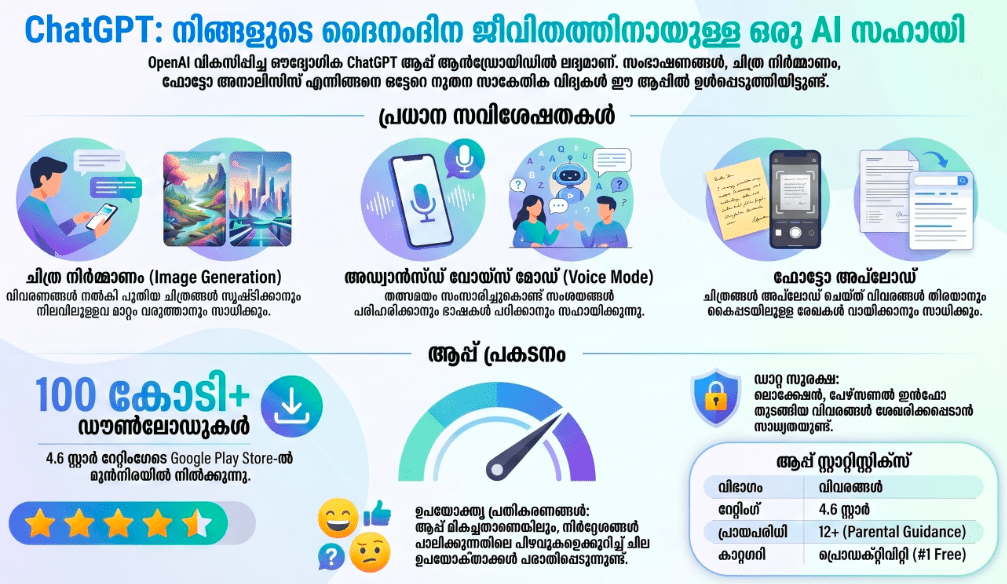
Key Features at a Glance
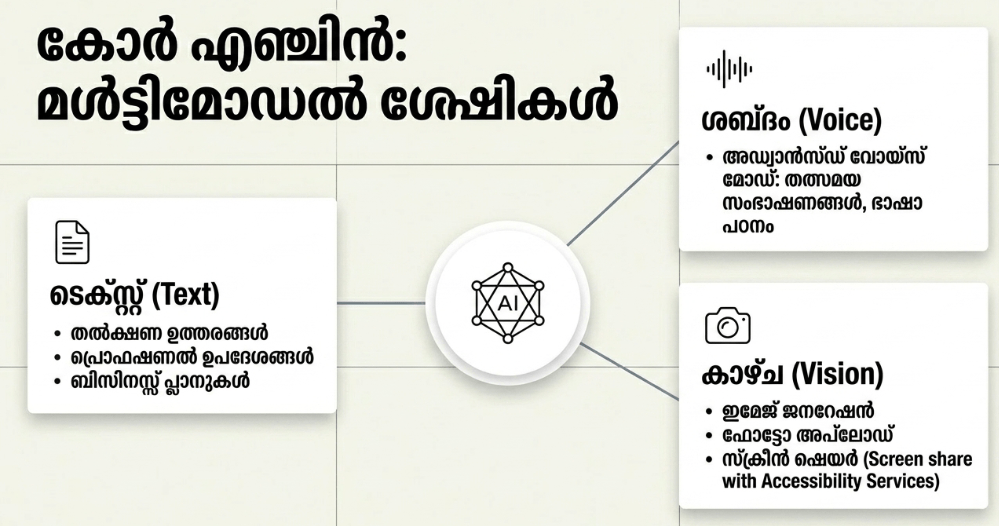
- Advanced Voice Mode: Tap the soundwave icon to have fluid, humanlike, real-time audio conversations to practice a new language or debate a topic hands-free.
- Multimodal Photo Uploads: Snap a picture of a landmark, document, or broken appliance to get instant transcriptions, summaries, or step-by-step troubleshooting help.
- Custom GPT Marketplace: Access a massive library of community-built mini-apps tailored for specific tasks like fitness coaching, math tutoring, or SEO optimization.
- Smart Memory Retention: Naturally remembers context and user preferences across distinct conversations so you never have to repeat your background constraints.
User Data & Market Reach
| Platform | Star Rating | Total Reviews | Downloads |
| iOS App Store | 4.8 / 5 | ~1.2 Million | 600M+ Cumulative |
| Google Play Store | 4.8 / 5 | ~47.7 Million | 1B+ Cumulative |
Technical Performance Review
- Storage: Remarkably lightweight on physical storage (clipping in under 150MB initially) because the heavy lifting and data crunching happen on OpenAI’s remote cloud servers.
- Data Usage: Highly optimized for text queries, but using the web-browsing feature, uploading high-res images, or streaming continuous audio via Advanced Voice Mode will notably increase your data consumption.
- Battery/Efficiency: While text interactions are gentle, prolonged sessions using Advanced Voice Mode or extensive image generation can cause mild device warming and accelerated battery drain due to continuous network streaming.
Aklakstudio Advice: If you are on a limited data plan or experiencing battery drain, toggle off the “Background App Refresh” in your phone’s settings and minimize the use of live voice chat when away from Wi-Fi.
Head-to-Head Comparison
| Attribute | ChatGPT (OpenAI) | Claude (Anthropic) |
| Voice Interaction | Advanced Voice Mode (Hyper-realistic, low latency) | Standard text-to-speech engine |
| Feature Ecosystem | Community Custom GPTs & Plugin Marketplace | “Artifacts” panel for standalone app/code previews |
| Free Tier Model | Generous access to GPT-4o mini with minor peak-hour caps | Strict usage limits on Claude 3.5 Sonnet |
Best Practices & Safety
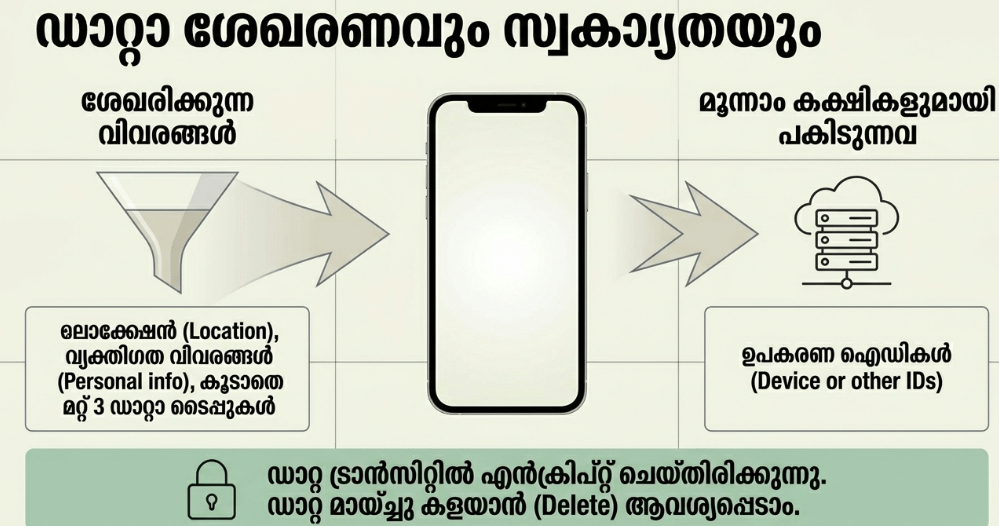
- Anonymize Your Prompts: Avoid pasting sensitive personal data, corporate trade secrets, or password credentials into the chat, as inputs may be used to train future model iterations unless explicitly opted out.
- Audit the Outputs: Treat ChatGPT like an eager intern—always cross-check factual claims, citations, and critical lines of code, as the system can still occasionally hallucinate incorrect data with high confidence.
- Manage Your Data Controls: Dive into the app settings to regularly export your data history or turn off “Chat History & Training” if you prefer your conversations to remain strictly temporary.
Setup Guide
1.Download the App:Takes 1 min.
Open the official Apple App Store or Google Play Store, search for “ChatGPT” by OpenAI, and tap install to avoid lookalike clone apps.
2.Create or Sync Your Account:Takes 2 min.
Launch the app and sign in using your existing OpenAI credentials, or create a new account using your Google, Apple, or email identity to sync data across your laptop and phone.
3.Configure Data & Location Permissions:Takes 1 min.
Navigate to Settings > Data Controls to opt-in or out of model training, and choose whether to enable optional location sharing for hyper-local search results.
4.Initiate Your First Chat:Instant.
Tap the text bar at the bottom to type your first prompt, or tap the microphone icon to test the hands-free voice interface immediately.
Common Questions (FAQ)
Q: Does the ChatGPT mobile app require a paid subscription?
A: No. The app features a highly capable free tier powered by the efficient GPT-4o mini engine. Upgrading to ChatGPT Plus is entirely optional for power users who want expanded limits on cutting-edge models.
Q: Can ChatGPT work when my phone is completely offline?
A: No. Because the artificial intelligence processes queries using massive cloud servers, your phone must have an active cellular data or Wi-Fi connection to stream responses.
Q: Will the app automatically sync with my computer’s web browser?
A: Yes. As long as you log in with the exact same account, your complete sidebar chat history will cleanly populate across your phone, tablet, and desktop browser.
Download the Official Version
- iOS Users: Download on the Apple App Store
- Android Users: Download on the Google Play Store
The Aklakstudio Final Verdict
The ChatGPT mobile app is a triumph of accessible design, successfully translating an advanced AI workstation into a fluid, on-the-go sidekick. It is an absolute must-download for busy students, content creators, and casual researchers who need immediate, structured answers to daily questions. However, professionals handling highly sensitive proprietary corporate data may find the mobile app’s default data-logging environment a bit too loose without setting up an enterprise-grade workspace.
Rating Scorecard
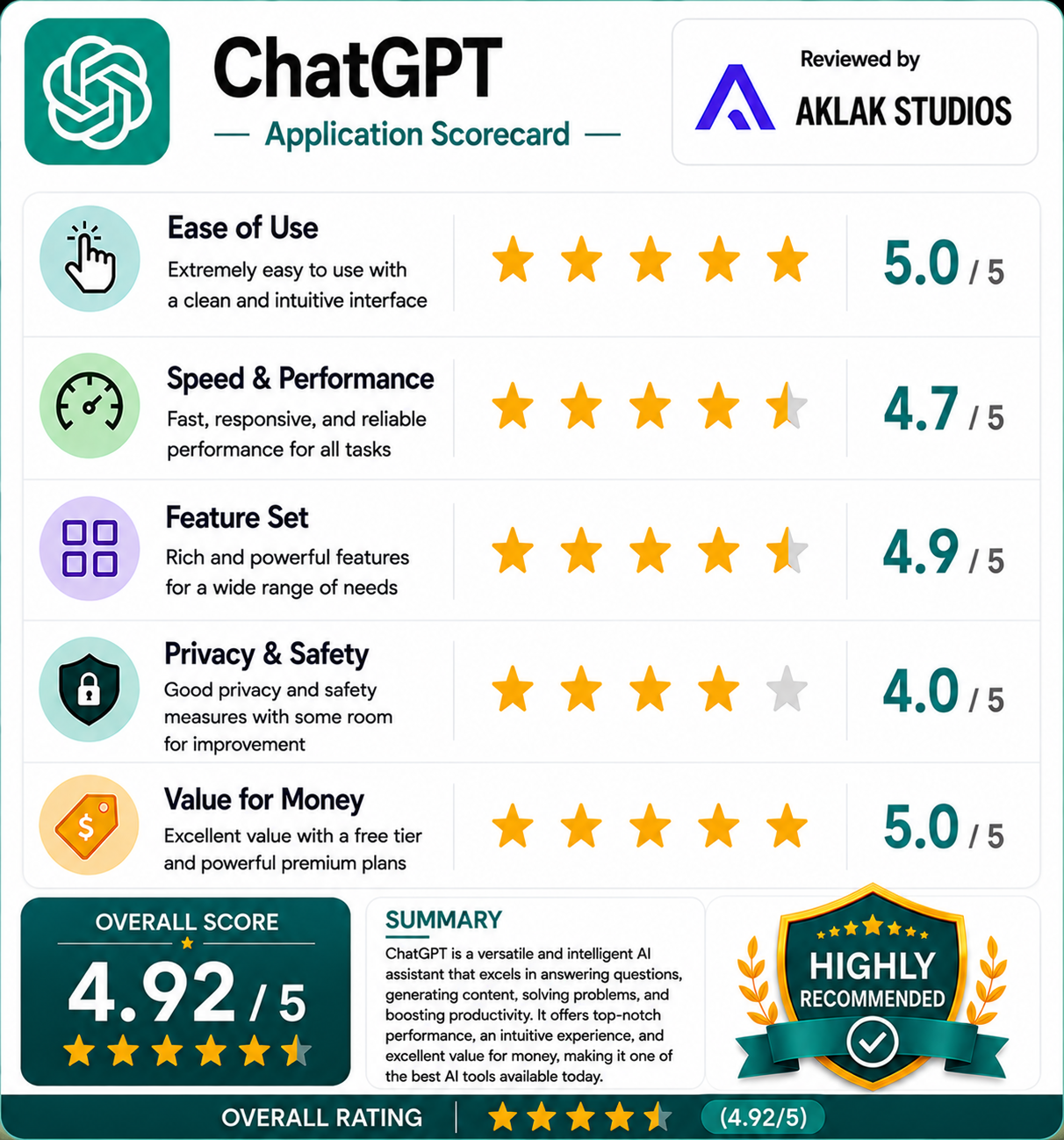
- Ease of Use: 5 / 5
- Speed & Performance: 4.7 / 5
- Feature Set: 4.9 / 5
- Privacy & Safety: 4 / 5
- Value for Money: 5 / 5