Artificial Intelligence is no longer limited to basic automation or simple tools. In 2026, AI has become a core part of advanced technologies across industries, including healthcare, transportation, finance, and space research. Businesses and individuals are using AI not just to save time, but to make faster, data-driven decisions. Understanding how AI integrates with advanced technologies is essential for anyone looking to stay relevant in the digital economy.
AI in advanced technologies primarily works by processing massive amounts of data and identifying patterns that humans cannot detect easily. This is where Big Data plays a critical role. AI systems are trained on large datasets, allowing them to predict outcomes, automate complex processes, and continuously improve over time. The combination of AI and Big Data reduces human error and increases efficiency across systems.
One of the most visible applications of AI in advanced technology is in healthcare. AI is being used to assist in early disease detection, analyze medical images, and even support robotic surgeries. These systems help doctors make faster and more accurate decisions. However, reliance on AI in healthcare also introduces risks such as data privacy concerns and the need for strict validation before implementation.
In the transportation sector, AI is driving the development of autonomous vehicles. These systems use real-time data, sensors, and machine learning algorithms to navigate roads, avoid obstacles, and improve safety. While self-driving technology continues to evolve, challenges such as regulatory approval, safety testing, and real-world unpredictability still limit full-scale adoption.
AI is also transforming financial systems by enabling fraud detection, algorithmic trading, and personalized financial recommendations. Banks and financial institutions use AI to monitor transactions in real time and identify suspicious activity. However, over-reliance on automated decision-making can lead to errors if the underlying data is biased or incomplete.
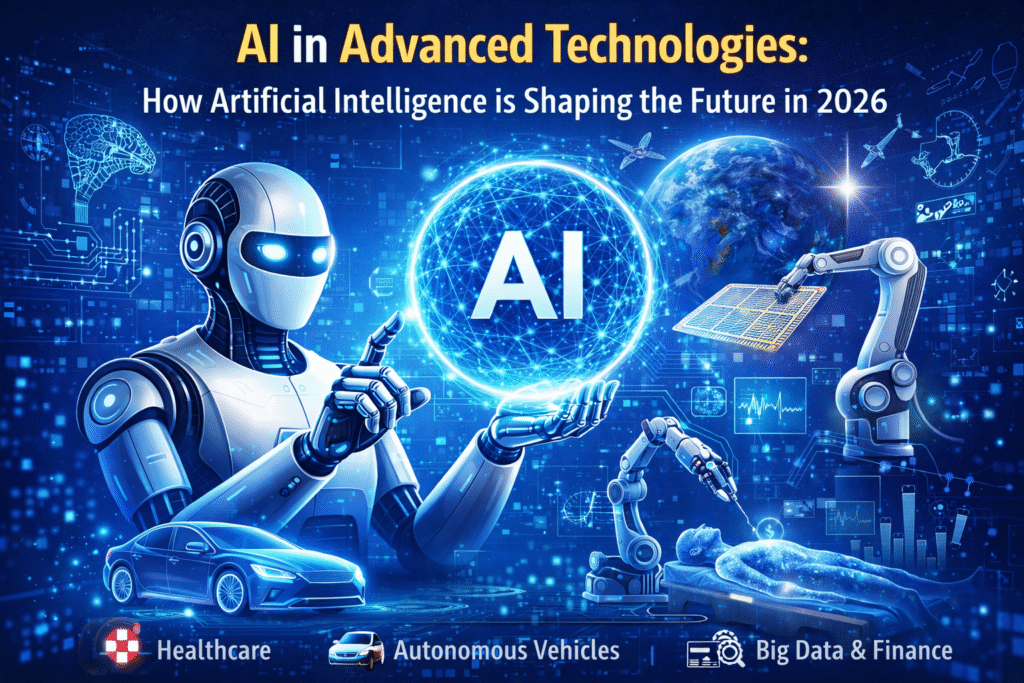
In manufacturing and industrial automation, AI-powered robots are improving production efficiency and reducing operational costs. These systems can work continuously with high precision, minimizing human intervention. Despite these advantages, there is a clear risk of job displacement, especially in repetitive and low-skill roles.
Another critical area where AI is advancing rapidly is space and scientific research. AI is used to analyze large datasets from satellites, predict weather patterns, and assist in space exploration missions. These applications require high accuracy and reliability, as errors can lead to significant financial and operational losses.
AI also plays a major role in cybersecurity. Advanced systems can detect threats, monitor network activity, and respond to attacks faster than traditional methods. However, the same technology can also be used by attackers to create more sophisticated cyber threats, making this an ongoing technological arms race.
Despite its advantages, AI in advanced technologies comes with clear limitations and risks. Data dependency is a major issue, as AI systems are only as good as the data they are trained on. Privacy concerns, ethical considerations, and lack of transparency in decision-making are ongoing challenges. Additionally, implementing AI systems requires significant investment, which may not be feasible for smaller businesses.
From an SEO and business perspective, AI in advanced technologies presents multiple opportunities. Content creators, bloggers, and businesses can build authority by focusing on specific niches such as AI in healthcare, AI in finance, or AI tools for businesses. Targeting long-tail keywords and providing practical, data-driven insights increases visibility and trust.
The realistic outlook for AI in advanced technologies is steady growth rather than instant transformation. While AI can improve efficiency and open new opportunities, it does not eliminate the need for human oversight. Systems still require monitoring, updates, and ethical control to function effectively.
In summary, AI is a foundational element of modern advanced technologies, influencing how industries operate and evolve. Its impact is significant, but not without challenges. The key advantage lies in using AI strategically, supported by reliable data and clear objectives, rather than relying on it blindly. Those who understand both the capabilities and limitations of AI will be better positioned to adapt and grow in the coming years.