AI-powered hospital operations platforms are transforming how healthcare systems manage patient flow, bed allocation, staffing, and operating room scheduling. Instead of reacting to bottlenecks, hospitals now use predictive analytics to anticipate demand and optimize resources in real time.
This guide explains how AI workflow optimization works, leading tools like LeanTaaS iQueue and Qventus, measurable benefits, risks, and 2026 trends.
What Is AI Hospital Workflow Optimization?
AI hospital workflow optimization uses predictive analytics and machine learning to forecast patient flow, optimize bed usage, improve operating room scheduling, and enhance staffing allocation in order to reduce wait times and maximize hospital resource efficiency.
How AI Improves Hospital Operations
AI systems analyze:
- Historical admission data
- Discharge patterns
- Surgery schedules
- Emergency department volumes
- Staffing levels
- Bed occupancy trends
Using predictive models, these systems forecast:
- Patient inflow spikes
- Bed shortages
- Discharge delays
- Operating room utilization gaps
Hospitals can then adjust schedules and staffing proactively.
Leading AI Hospital Operations Platforms
1. LeanTaaS iQueue
Focus: Operating room and infusion center optimization.
Key Capabilities:
- OR block time optimization
- Surgery scheduling prediction
- Capacity utilization modeling
Impact:
- Reduces unused OR time
- Increases surgical throughput
- Improves revenue capture
2. Qventus
Focus: Patient flow and discharge optimization.
Core Functions:
- Predicts discharge delays
- Identifies patient bottlenecks
- Automates workflow coordination
- Improves emergency department throughput
Impact:
- Faster discharge processes
- Reduced boarding time
- Smoother patient transitions
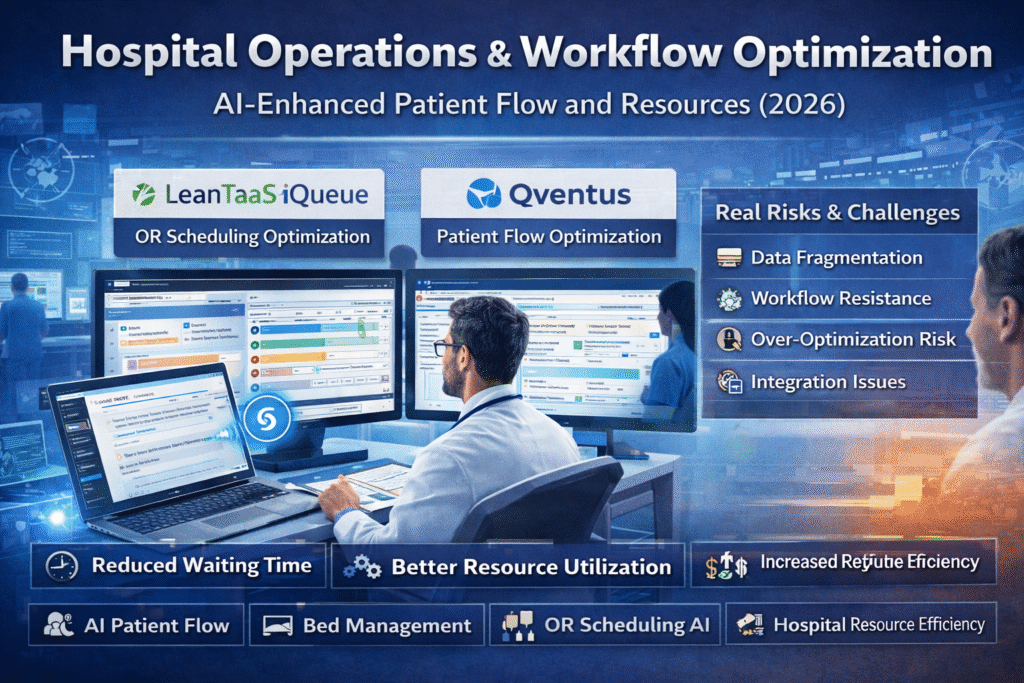
Major Benefits of AI Workflow Optimization
Reduced Waiting Time
AI forecasts demand and prevents bottlenecks in emergency departments and operating rooms.
Better Resource Utilization
Hospitals maximize bed occupancy efficiency without overloading staff.
Improved Staffing Allocation
Predictive models help match staff levels to patient volume.
Increased Revenue Efficiency
Optimized scheduling reduces lost operating room capacity.
Real Risks and Implementation Challenges
Data Fragmentation
AI systems require clean, integrated data from multiple hospital systems.
Workflow Resistance
Staff adoption may be slow without training and change management.
Over-Optimization Risk
Excessive efficiency focus can strain staff if not balanced properly.
Integration with Legacy Systems
Poor integration can create additional complexity instead of solving bottlenecks.
2026 Trends in AI Hospital Operations
- Real-time patient flow dashboards
- Predictive staffing automation
- AI-assisted discharge coordination
- Cross-department capacity modeling
- Autonomous scheduling systems
Hospitals investing in predictive operations are increasingly using AI not just for clinical support but for operational intelligence.
Frequently Asked Questions (FAQ)
What is hospital workflow optimization?
It is the process of improving patient flow, bed usage, staffing, and scheduling using predictive analytics and operational strategies.
How does AI reduce hospital waiting time?
AI predicts patient inflow and discharge patterns, allowing proactive scheduling and resource allocation.
Can AI improve operating room efficiency?
Yes. Platforms like LeanTaaS iQueue optimize OR scheduling to reduce unused time blocks.
What is the biggest challenge in hospital AI operations?
Integration with existing systems and ensuring staff adoption.
Is AI hospital optimization suitable for small hospitals?
Yes, but ROI depends on patient volume and data maturity.